August 11, 2026

5 Warning Signs Your Long Island Garage Door Is About to Fail (And What to Do Next)

5 Warning Signs Your Long Island Garage Door Is About to Fail (And What to Do Next)

Your garage door is the largest moving component in your house. Day in and day out—through Long Island’s humid summers, freezing winter snaps, and salt-heavy coastal air—it operates quietly in the background. Until the moment it doesn't.

Most garage door failures don't happen out of nowhere. Long before a cable snaps or a door gets stuck halfway, your system sends subtle warning signals. Catching these early can mean the difference between a simple tune-up and an expensive emergency replacement.

Here are 5 clear warning signs that your garage door needs professional attention, along with tips on how to keep your home safe and accessible.

1. Loud Grinding, Squeaking, or Slapping Noises

A healthy garage door operates smoothly with a low motor hum. If you start hearing unusual noises, your system is telling you that components are friction-locked or misaligned:

Grinding or Screeching: Usually indicates dry or worn metal rollers, unlubricated track curves, or failing bearings in the opener.

Loud Popping or Bangs: Often signals that a torsion spring is binding, under extreme stress, or has snapped.

Slapping or Rattling: A sign of loose chain/belt tension on your garage door opener or loose hinge hardware along the door panels.

Long Island Tip: Salt-laden coastal air accelerates rust on springs, tracks, and rollers. Regular lubrication with a high-grade silicone garage door spray (not WD-40, which attracts dirt) helps prevent premature metal corrosion.

2. Slow, Jerky, or Hesitant Operation

When you press the wall button or remote, your door should move evenly from start to finish. If the door moves in jerky bursts, pauses mid-cycle, or takes noticeably longer to open than it used to, there are three primary culprits:

Worn Torsion Springs: Springs lift up to 90% of the door’s total weight. As springs fatigue over thousands of cycles, the opener has to lift far more dead weight, leading to jerky motion and motor strain.

Roller or Track Resistance: Bent tracks or flattened roller bearings cause binding as the door transitions from vertical to horizontal movement.

Opener Force Settings: Modern openers (like LiftMaster and Chamberlain) have built-in safety travel limits. When internal gears wear out or settings drift, the motor struggles to complete a cycle.

3. The Door Looks Off-Balance or Lifts Unevenly

Look at your garage door while it’s closed, or watch it closely as it opens. Is one side sitting higher than the other? Does one bottom corner hit the driveway before the opposite side?

An off-balance door is a serious safety hazard. It usually means:

One of the lift cables has frayed, stretched, or slipped off the rotating drum pulley.

Torsion spring tension is uneven across the shaft.

Track alignment has shifted out of square.

Operating an unbalanced door puts enormous uneven stress on the tracks, rollers, and motor, quickly turning a minor adjustment into a complete track collapse.

4. The Door Reverses Immediately After Touching the Floor

If your garage door reaches the driveway, hesitates, and immediately opens back up, the safety system is tripping:

Photo-Eye Sensor Misalignment: Check the small lenses near the bottom corners of your garage door opening. If the green/yellow LEDs are blinking or out, clean off any cobwebs or dirt and ensure they are pointed directly at each other.

Travel Limit Adjustment: Your opener’s internal limits may need recalibration so the motor knows exactly where the ground sits.

Worn Weather Stripping or Hard Obstructions: Ice buildup or warped bottom rubber seals can trigger the auto-reverse safety mechanism.

5. Unexplained Increases in Your Energy Bills

If your garage is attached to your home or sits below a bedroom, an uninsulated or poorly sealed garage door acts as a thermal bridge. Over time, bottom rubber seals crack and side weatherstripping warps, allowing ocean wind, drafty air, and moisture to seep into your garage.

Upgrading to an insulated residential garage door with fresh perimeter seals keeps your home comfortable year-round while lowering winter heating and summer cooling costs.

Why "Zero Guesswork" Matters for Garage Door Safety

Garage door torsion springs store high levels of mechanical tension to lift heavy doors. Attempting to repair springs, cables, or high-tension brackets without specialized tools and training can cause severe injury or property damage.

At JD Garage Doors, we bring over 30 years of hands-on experience across Long Island—from Selden and Port Jefferson to Smithtown, Riverhead, and the Hamptons. We don't rush installations or guess on repairs: every door is squared, load-balanced, safety-tested, and built to withstand local coastal weather.

Need a Garage Door Checkup or Rapid Repair?

๐Ÿ› ๏ธ Free Inspections & Honest Estimates

โšก 24/7 Emergency Repairs Across Long Island

๐ŸŽ–๏ธ 10% Discount for Senior Citizens & Veterans

JD Garage Doors

JD Garage Doors delivers expert garage door installation, repair, and maintenance services across Long Island with precision and reliability.

CONTACT US

Send us a Message

Please provide your details, and we'll reach out to you as soon as possible.

Blog - Website Form

Search

Recent Post

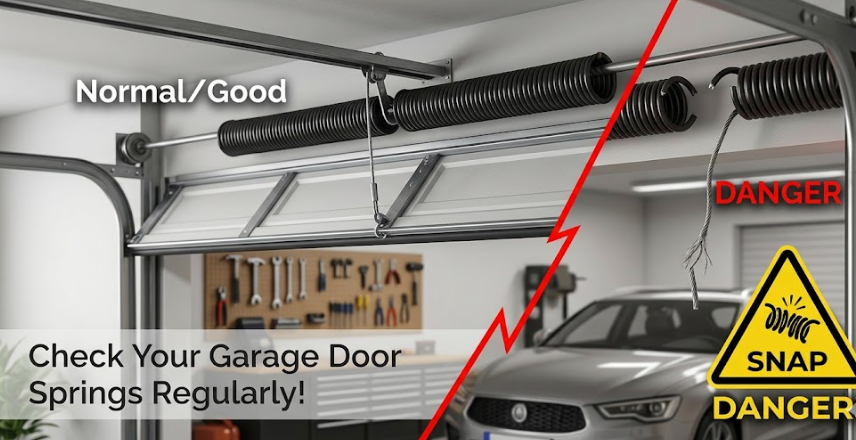
An educational graphic comparing an intact, functioning garage door spring labeled
March 23, 2026
Your garage door is the largest moving object in your home, and the "heavy lifting" isn't actually done by the motor—it’s done by the springs. These springs are under immense tension and have a limited lifespan (usually 10,000 cycles). If a spring snaps while the door is moving, it can cause the door to come crashing down, leading to expensive damage or serious injury. Here are five warning signs that you need to call a professional before it’s too late: 1. A Loud "Bang" from the Garage Most people hear a spring break before they see it. It sounds like a gunshot or a heavy object falling. If you hear a loud mystery noise coming from the garage, check the spring located above the door or along the tracks immediately. 2. The Door Stops After Rising Only 6 Inches Garage door openers have safety sensors. If a spring is broken, the door becomes too heavy for the motor to lift. The opener will sense the weight strain and stop the door almost immediately after it starts opening. 3. Visible Gaps in the Spring A healthy torsion spring (the one above the door) should look like one continuous coil. If you see a 2-inch gap in the middle of the coil, the spring has snapped and lost its tension. 4. The Door Looks Crooked When Opening On doors with two extension springs (along the sides), if one side breaks, the door will pull unevenly. This causes the door to tilt or get stuck in the tracks. 5. Cables Look Loose or "Frayed" When a spring breaks, the tension that keeps the cables tight disappears. If you see cables hanging loosely or "bird-nesting" around the drum, your spring system has failed. Don’t DIY Spring Repairs! Garage door springs are under enough tension to be lethal if handled incorrectly. If you notice any of these signs, keep the door closed and call a certified technician.
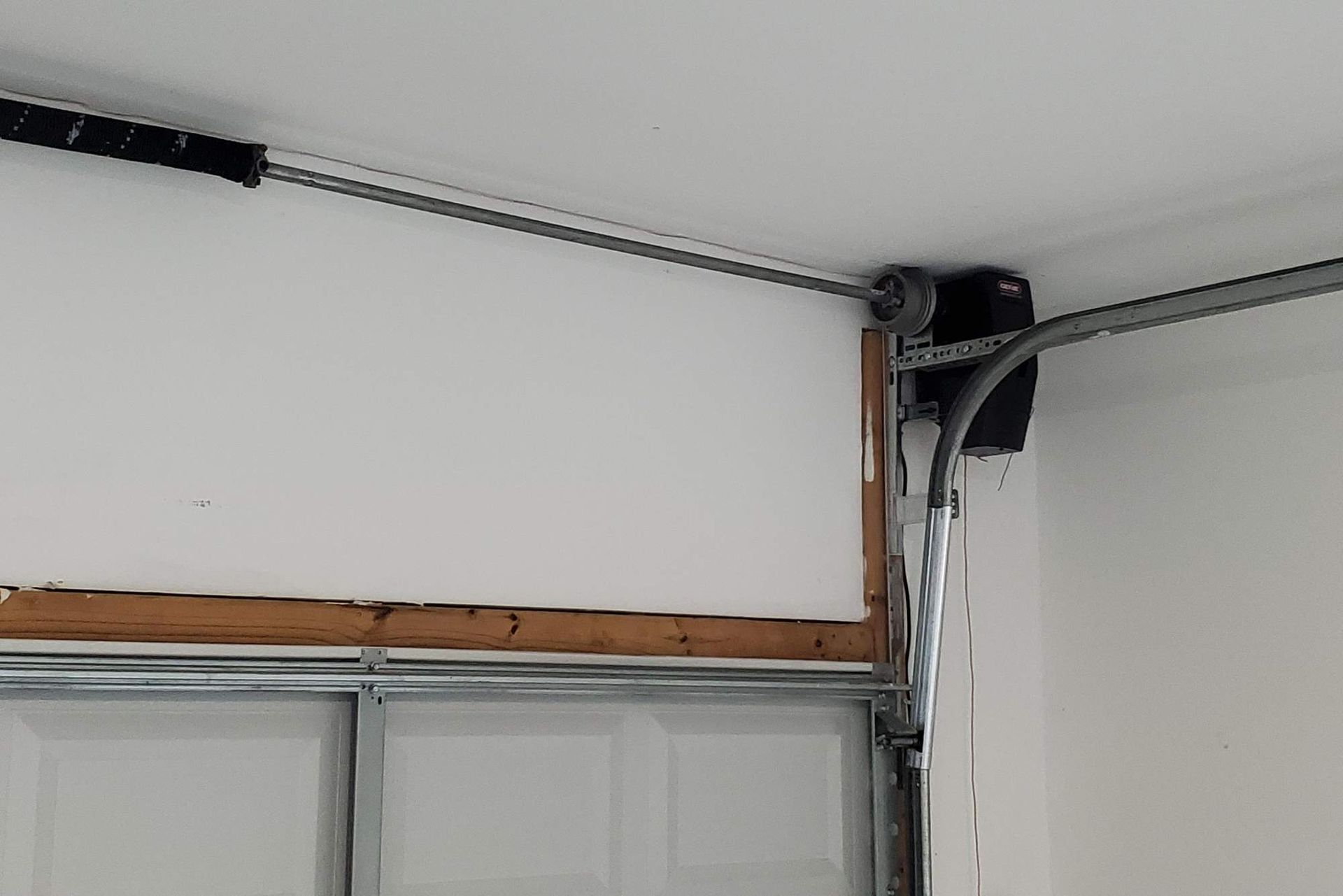
A garage door opener motor unit and drive rail mounted to the ceiling above a closed garage door.
March 15, 2026
For many homeowners across Long Island—from Selden and Smithtown to East Northport—the garage door is the primary entrance to the home. It’s a complex piece of machinery that we often take for granted until that morning when the door won't lift, or you hear a loud "bang" from the garage. The most common culprit behind a door that won't move? A broken torsion spring. While there are many home repairs that are perfect for a weekend DIY project, garage door springs are not one of them. Here’s why calling a professional like JD Garage Doors is the safest and smartest move. 1. Extreme Tension Equals Extreme Risk The torsion spring is responsible for doing the heavy lifting. To move a door that weighs hundreds of pounds, these springs are wound under incredible tension. If a spring snaps or a tool slips while an untrained person is working on it, that energy is released instantly. This can lead to serious injury or significant property damage. Our technicians have over 30 years of experience and use specialized winding bars and safety equipment to manage this tension safely. 2. The Balance Must Be Exact A garage door isn't just about "up and down"—it’s about balance. If a spring is replaced but not wound to the exact specifications for your door’s specific weight and height, the entire system will suffer. An unbalanced door puts immense strain on your garage door opener, leading to a motor burnout that will cost far more to fix than a simple spring replacement. At JD Garage Doors, we don't just "install"; we test, adjust, and re-test until the door operates with zero resistance. 3. Identifying the Root Cause Sometimes a broken spring is just a symptom of a larger issue, like worn-out rollers, frayed cables, or tracks that have shifted out of alignment. When you call for a professional repair, we perform a full safety inspection. We look for the "why" behind the failure to ensure you don’t find yourself stuck in your driveway again two weeks later. Trust the Long Island Experts JD Garage Doors has been serving residential and commercial customers in Port Jefferson, Commack, Medford, and throughout Suffolk County for three decades. We understand the wear and tear that our local climate—with its salt air and seasonal shifts—puts on your hardware. Is your garage door acting up? Is the door opening slowly or unevenly? Did you hear a loud snap coming from the garage? Does the door feel heavy when you try to lift it manually? If so, don't wait for the system to fail completely. We offer 24/7 emergency repairs and free inspections to keep your home secure and your morning routine on track. ๐Ÿ“ Serving: Selden, Smithtown, Huntington, and all of Long Island ๐Ÿ“ž Call us today: 1-631-681-5779 ๐ŸŒ Visit us: www.garagedoorinstalls.com 30 Years of Precision. Zero Guesswork.
Two Aperol spritzes in tall glasses with straws, on a weathered wooden table.
By Joey D February 26, 2026
As a homeowner, your garage door is likely the most-used entrance to your house. But like any mechanical system, it won't last forever. If your door is acting up, you’re probably asking yourself: “Can I get away with a repair, or is it time for a full garage door installation?” Making the wrong choice could cost you hundreds in recurring repair fees or leave your home vulnerable to security risks. Here is everything you need to know about choosing between garage door repair and professional replacement. When Should You Choose Garage Door Repair? Not every glitch requires a brand-new door. If your door is relatively new (under 10 years old), a repair is usually the most cost-effective path. The Door Feels Heavy: This is often a sign of a broken garage door spring. While dangerous to fix yourself, a professional technician can replace springs quickly to restore balance. The Door Won’t Open or Close: Often, this is a simple issue with the photo-eye sensors being misaligned or the garage door opener needing a minor recalibration. A Single Damaged Panel: If you backed into the door but the rest of the system is fine, we can often replace a single section rather than the entire unit. Signs It’s Time for a New Garage Door Installation If you find yourself calling a technician every few months, you’ve reached the point of diminishing returns. Here are the top SEO-backed reasons to upgrade: 1. Boost Your Home’s Curb Appeal and Value According to the Cost vs. Value Report, garage door replacement consistently offers one of the highest returns on investment (ROI) for home improvement projects. A modern, stylish door can instantly increase your home’s resale value. 2. Improved Energy Efficiency (R-Value) Old doors are often thin sheets of metal that let heat escape. Modern doors come with advanced polyurethane or polystyrene insulation. This improves your home's R-value, keeping your garage—and the rooms above it—warmer in the winter and cooler in the summer. 3. Enhanced Security Features Older openers use "fixed codes" that can be easily hacked by tech-savvy intruders. New models feature rolling code technology, which changes the security code every time the remote is pressed, ensuring your home stays secure. 4. Noise Reduction If your garage door sounds like it’s struggling, the tracks and rollers are likely worn. New systems utilize nylon rollersand belt-drive openers that are whisper-quiet—perfect if you have a bedroom located near the garage. Conclusion: Safety First A malfunctioning garage door isn't just an inconvenience; it’s a safety hazard. If your door is sagging, shaking, or lacks modern safety sensors, the "repair" is often just a temporary bandage on a larger problem. Are you looking for "garage door installation near me"? At Garage Door Installs , we specialize in high-quality, durable, and beautiful garage door solutions tailored to your home’s needs. Contact us today for a free estimate or to browse our latest styles!

SHARE ARTICLE:

Contact JD Garage Doors

Precision Garage Door Solutions for Homes & Businesses

Expert garage door repair, opener installation, and torsion spring replacement serving Selden, NY and surrounding Long Island communities.

REQUEST A FREE ESTIMATE

Call us now: